








Workshop on the Importance and Necessity of Artificial Intelligence in Promoting Handicrafts
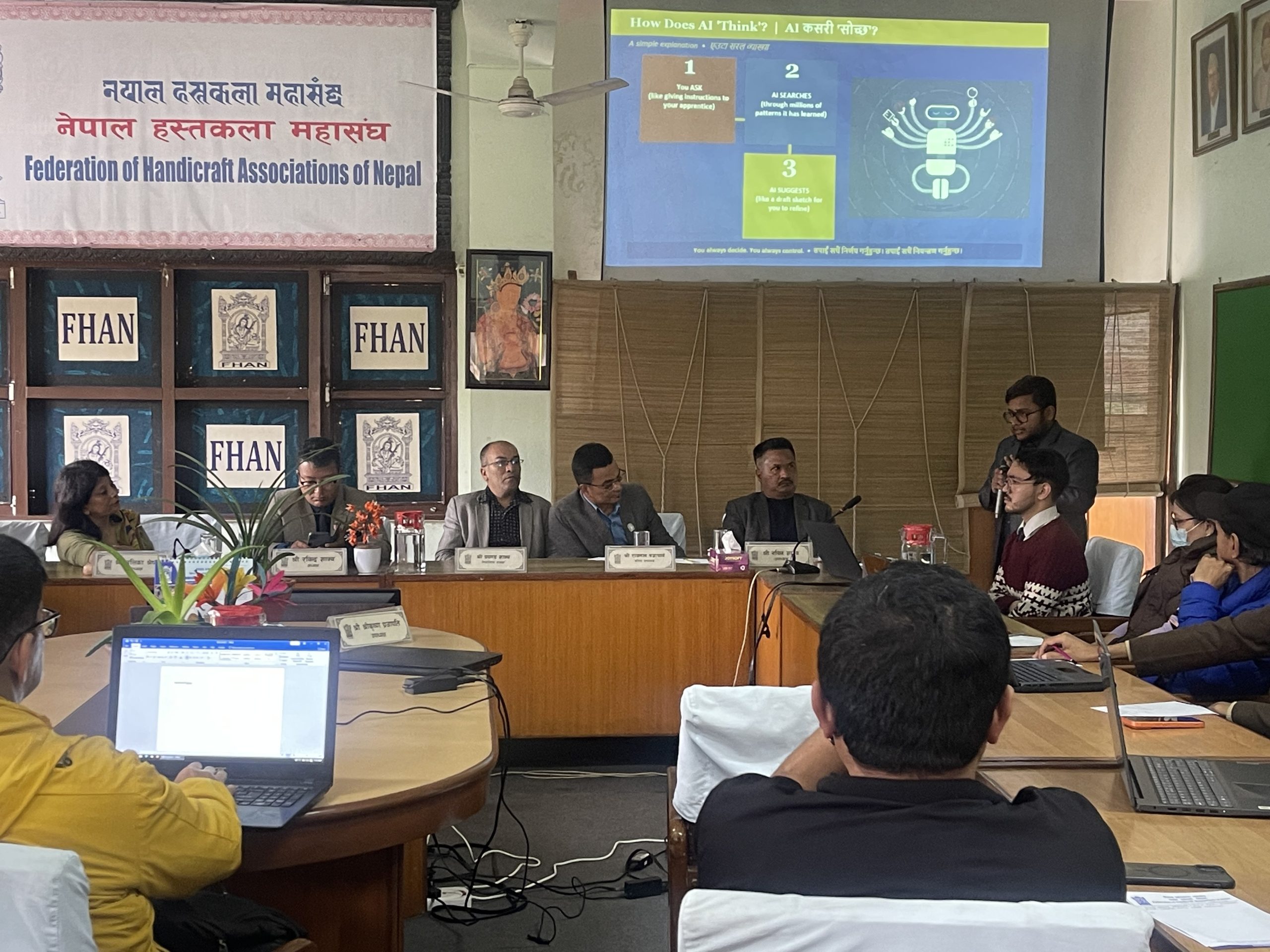
The Federation of Handicraft Association of Nepal organized an insightful workshop titled “Importance and Necessity of Artificial Intelligence to Promote Handicraft” on 30 March 2026 at its headquarters in Thapathali. The three-hour session combined informative presentations with practical, hands-on learning to introduce artisans and handicraft professionals to the transformative potential of Artificial Intelligence (AI).
The workshop was led by AI researchers Siddhant Pokharel and Nikesh Aryal, and brought together 40 participants from diverse age groups and professions within the handicraft sector. The event was also attended by key FHAN representatives, including President Rabindra Shakya, Senior Vice President Raj Man Bajracharya, and Vice President Nabin Shakya.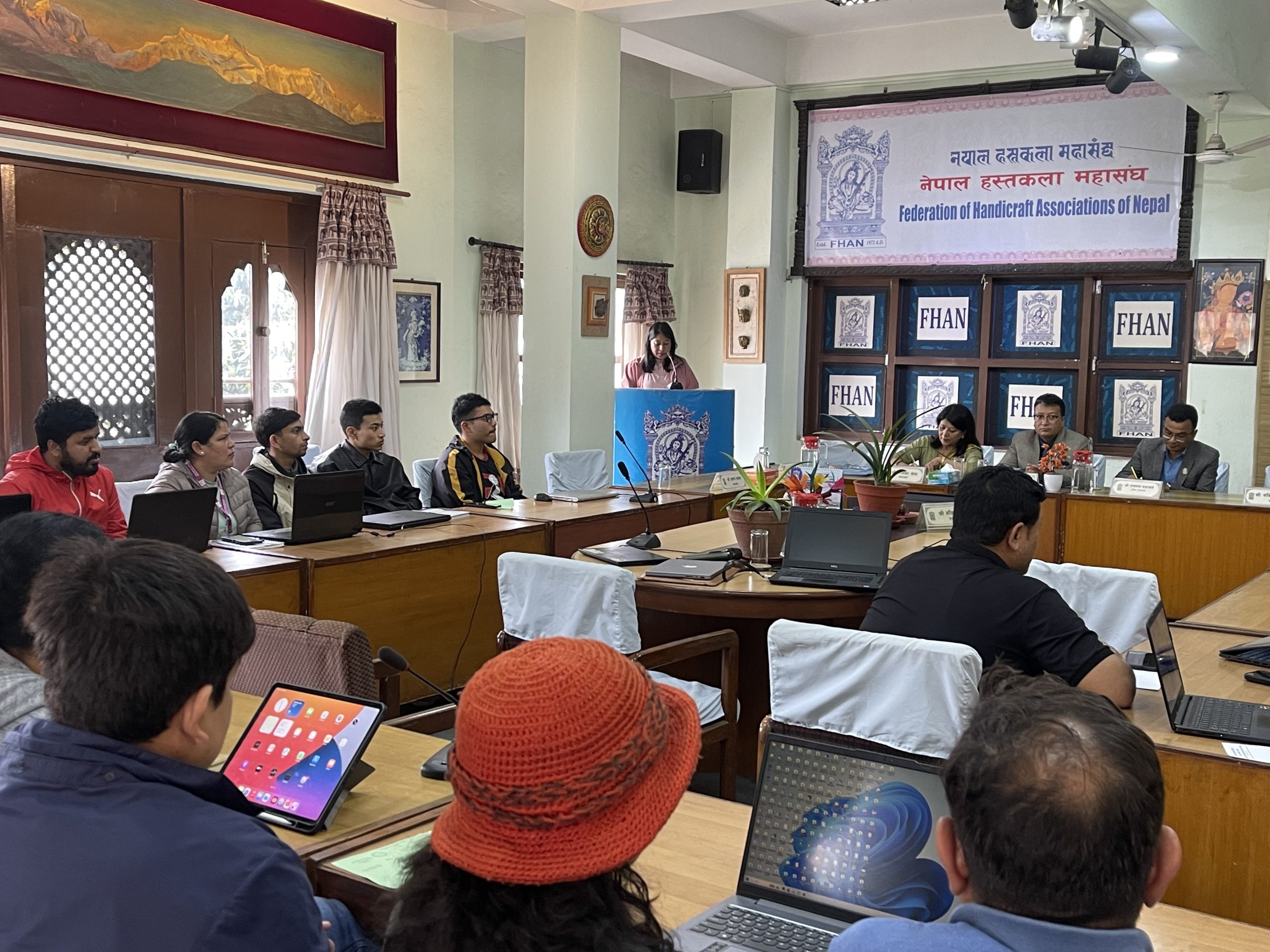
The session offered valuable insights into bridging the gap between traditional craftsmanship and modern digital tools. For artisans whose work is deeply rooted in manual skill and heritage, the idea of integrating AI into their workflow may initially seem unfamiliar. However, the workshop emphasized that in today’s fast-paced digital landscape, adopting such tools is no longer optional, it is essential.
Artisans often dedicate most of their time to creating their craft, leaving limited capacity for marketing and online promotion. With the growing importance of user-generated content and digital visibility, understanding and utilizing AI tools has become as crucial as mastering product photography. AI can significantly simplify content creation, enabling artisans to effectively showcase their work to a wider audience.
As highlighted by the event’s MC, Pratishara Manandhar, it is important for everyone to understand not only what AI is, but also how to use it responsibly and effectively. In an era defined by rapid technological advancement, the ability to use AI strategically can offer a significant competitive advantage.
The presenters demonstrated practical applications of AI, emphasizing that while these tools are accessible to everyone, their effectiveness depends on asking the right questions and using them with clear intent. For handicraft artisans in particular, AI can serve as a powerful tool for content creation, product storytelling, and digital marketing, helping them design engaging visuals and create compelling promotional material.
The workshop concluded with an interactive hands-on session, where participants explored AI-powered tools such as ChatGPT and Canva. This practical segment allowed attendees to directly apply their learning and gain confidence in using AI for their own work.
Overall, the workshop proved to be a highly enriching experience, equipping participants with essential knowledge and skills to navigate the evolving intersection of traditional handicrafts and modern technology. It marked an important step toward empowering artisans to thrive in an increasingly digital world.


About author